
Packing fragile items for your move
How to protect crockery, artwork, electronics and delicate furniture during a move
Pack fragile items safely by wrapping each piece individually in packing paper or bubble wrap, placing them in sturdy, fully padded boxes with filler in every gap, and clearly labelling each box. Three things are key: the right materials, careful cushioning and clear marking. In this guide we walk step by step through how crockery, glasses, mirrors, electronics and delicate furniture survive the move unscathed — and how to store them safely in between.
Take inventory first, then pack
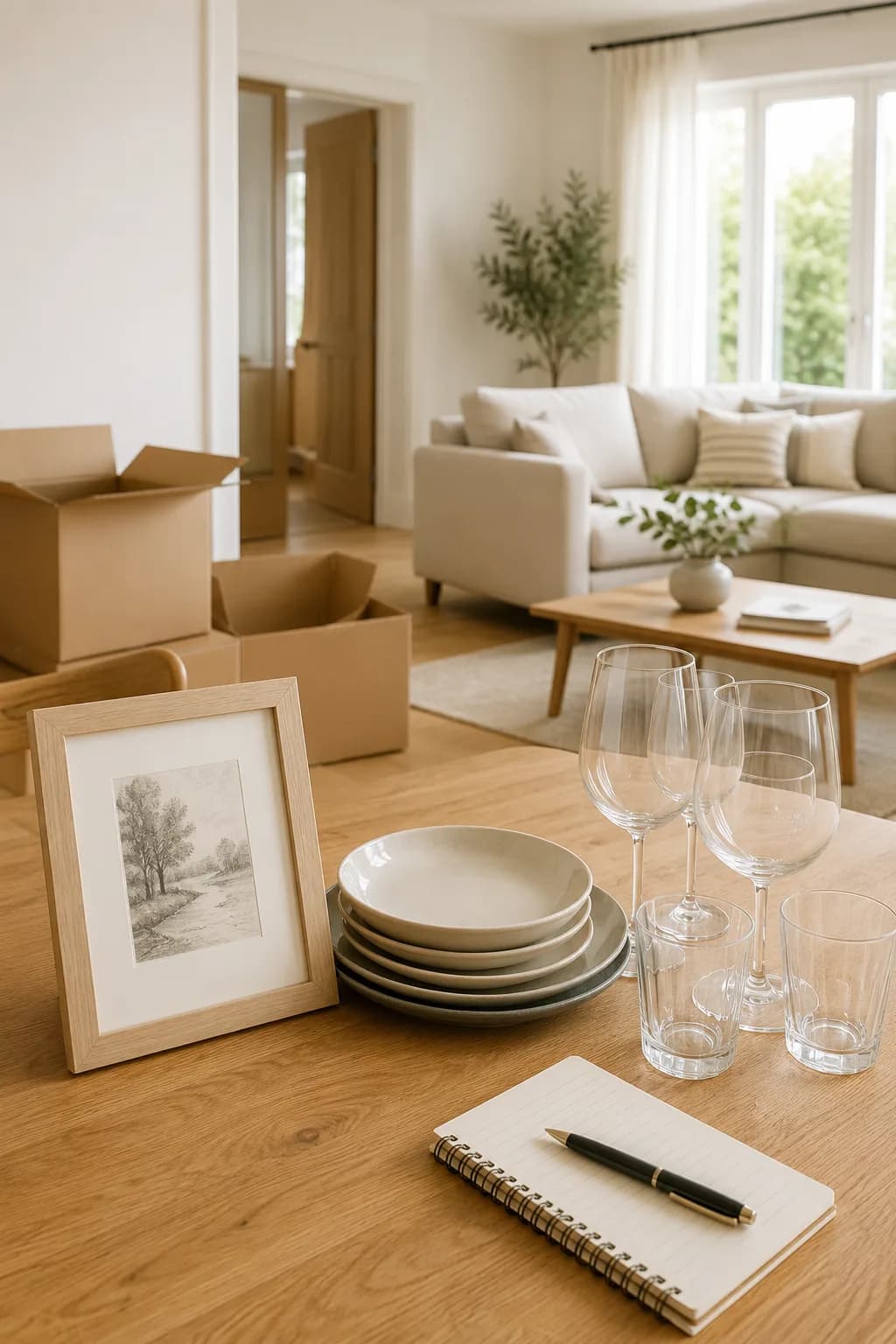
Every household holds a surprisingly large number of fragile things — from plates, cups and glasses to framed pictures and mirrors to sensitive electronics like TVs, monitors and printers. Add lamps, jewellery, vases, aquariums and antique furniture. Before reaching for the first box, get an overview: go room by room and create an inventory list of all delicate items.
Inventorying has a double benefit. First, you see at a glance how much packing material you really need. Second, a move is the ideal moment to declutter: every item you don't take saves material, time and transport risk. Ask yourself honestly about each piece — do I need it at the new place, does it have real value? The less you pack, the smaller the risk of something breaking.
Then sort by fragility and by room. Particularly valuable or irreplaceable pieces — heirlooms, artwork, expensive tech — get their own category and the best padding. This way you always know while packing what needs extra care, and you'll find everything faster when unpacking.
The right packing material
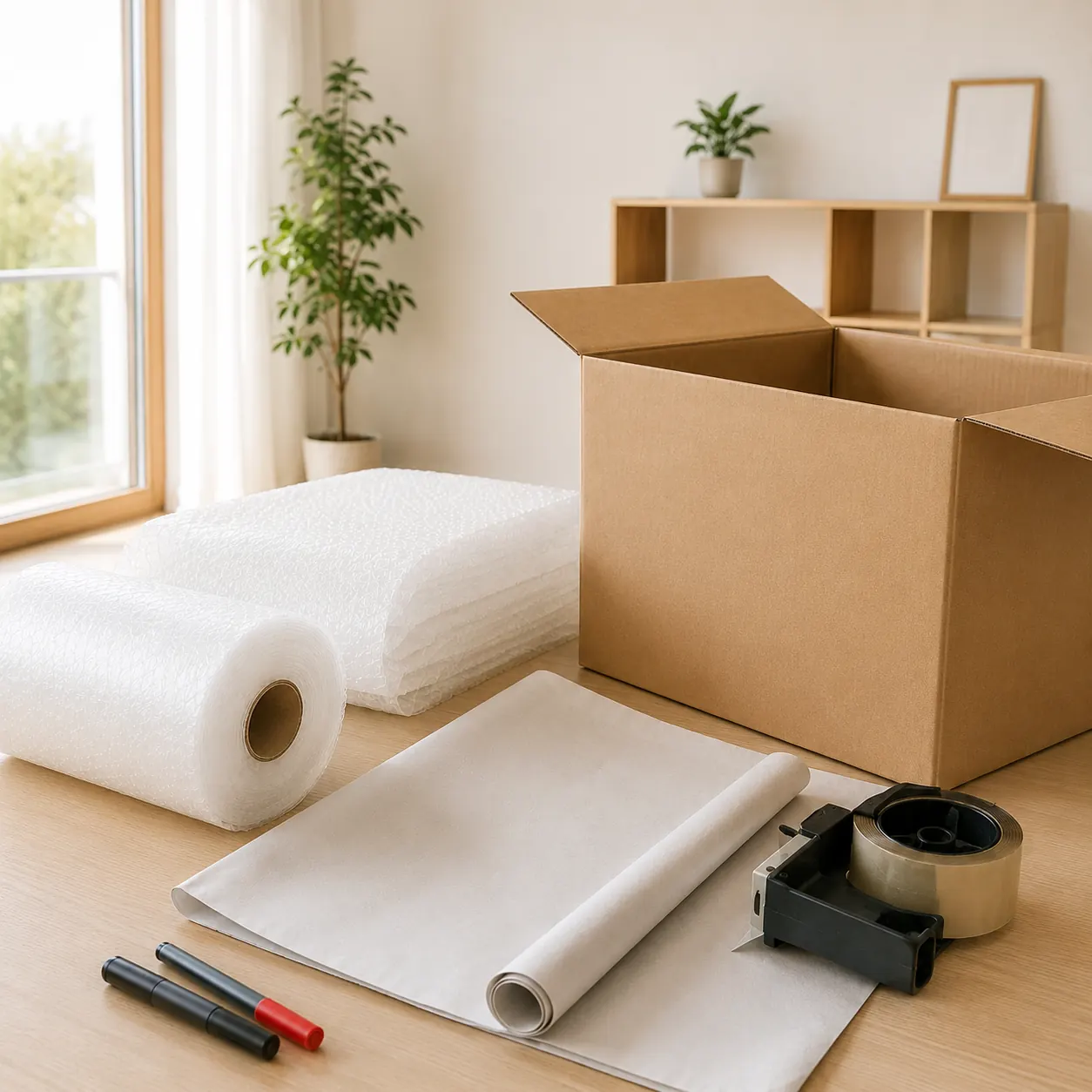
Good material determines the outcome. Cutting corners in the wrong place costs you broken crockery in the end. For fragile items, acid- and ink-free packing paper or tissue paper (no colour transfer) is proven, along with bubble wrap for maximum protection and special dish and glass boxes with dividers that fix each piece individually.
Just as important as wrapping is the box itself. Reinforce the bottom and side edges of each box with quality packing tape before filling, and place a layer of packing paper or bubble wrap on the bottom — this cushion absorbs shocks and protects the most delicate pieces at the very bottom. Always fill cavities with crumpled paper so nothing shifts: what doesn't move can't clink together.
Your packing checklist
- Dish and glass boxes with dividers — for secure individual protection
- Acid- and ink-free packing paper or tissue paper — for wrapping
- Bubble wrap — for particularly delicate and valuable pieces
- Sturdy moving boxes in various sizes — small boxes for heavy items
- Quality packing tape — for reinforcing bottoms and edges
- Red and black markers — for warnings and content labelling
- Furniture blankets and covers — for larger, delicate furniture pieces
Wrapping the most common items correctly
Each type of item has its own packing logic. Knowing it makes you pack faster and more safely:
- Wrap plates individually and place them on edge (not flat) in the box — vertically they withstand significantly more pressure.
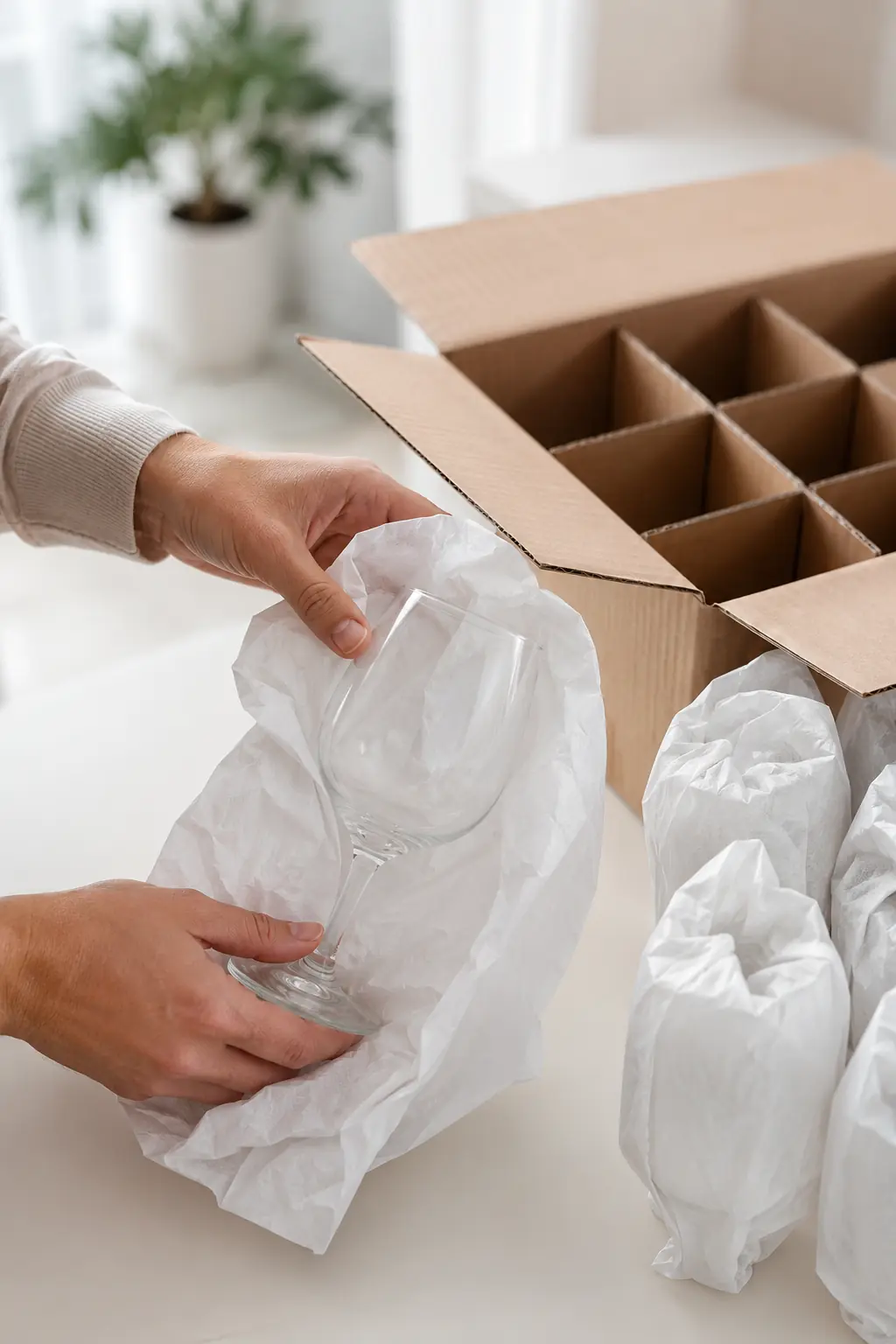
- Glasses and cups are wrapped individually; fill hollow bodies with paper inside. They are safest in boxes with dividers.
- Mirrors and framed pictures get corner protection on all corners, are wrapped in bubble wrap and always transported upright (never lying flat).
- For electronics, ideally use the original box. If missing, wrap devices generously in bubble wrap; label cables so setup at the new place goes quickly.
- Disassemble lamps as far as possible — shade, base and bulb separately and individually padded.
- Protect antique and delicate furniture with furniture blankets and covers; removable parts are disassembled and packed separately.
The golden rule for everything: better one layer of padding too many than one too few. And heavy items go at the bottom of the box, light ones on top — so nothing gets crushed from above.
Label and carry safely
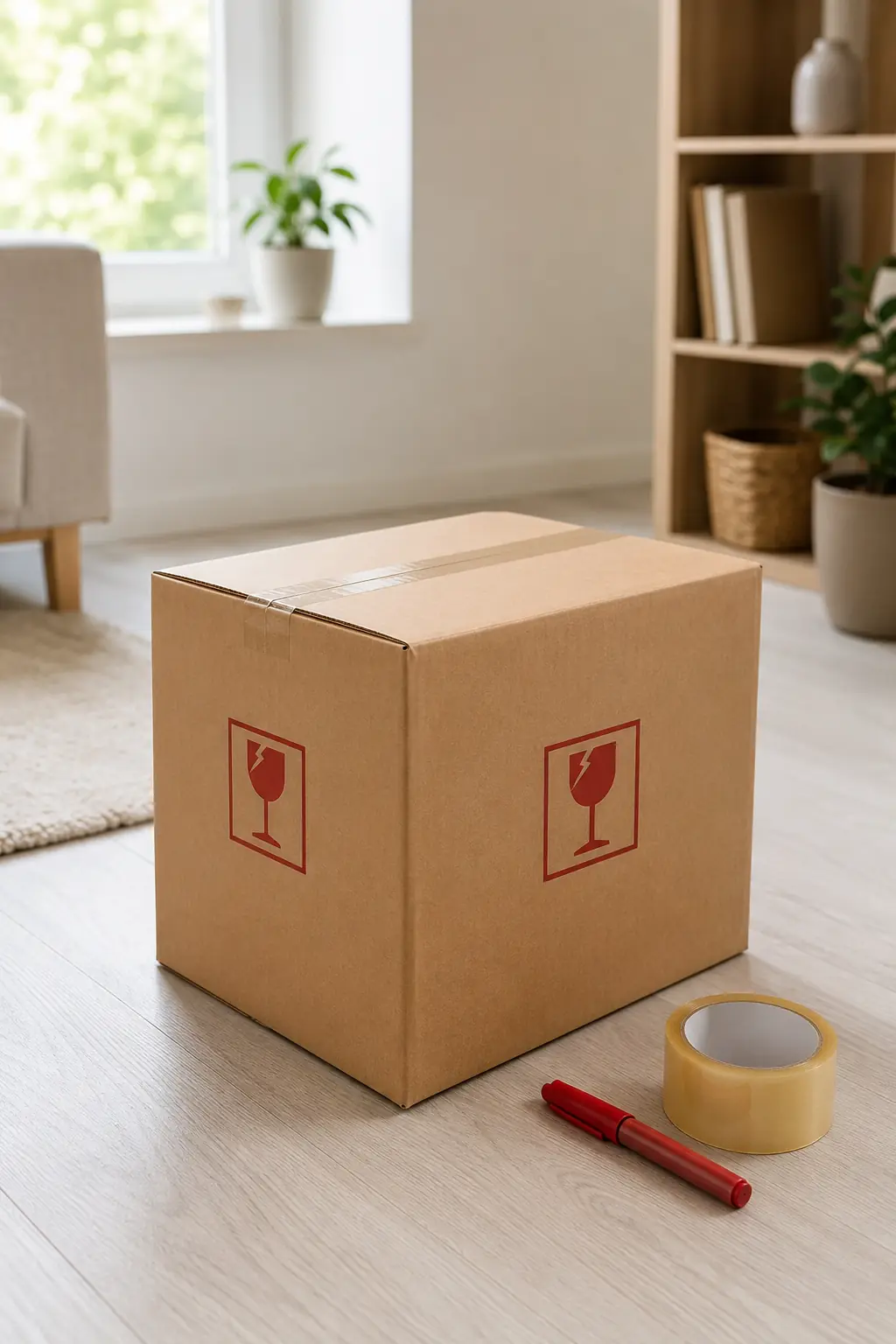
Label every box immediately after packing — not later, when ten identical boxes are already standing around. Write FRAGILE and HANDLE WITH CARE clearly in red marker on at least two sides of each box. With a black marker add the contents and the destination room at the new place. An arrow with "this way up" shows how the box must stand.
This takes a few seconds and pays off twice: when unpacking you immediately find what belongs where. And when carrying, everyone — yourself, friends, the moving team — handles a clearly marked box more carefully. Anyone who reads "FRAGILE" grabs it differently.
Pay attention to the right weight balance: heavy items go in small boxes so they stay portable and the bottom holds up. Large boxes are reserved for light items. Lift from the knees not the back, and carry one more trip rather than filling a box to the brim.
Safe temporary storage at BOXLY
A move doesn't always go seamlessly from A to B. During renovations, a gap between two apartments or a larger remodel you need a safe transitional solution for your delicate items — that's exactly what a storage unit is for.
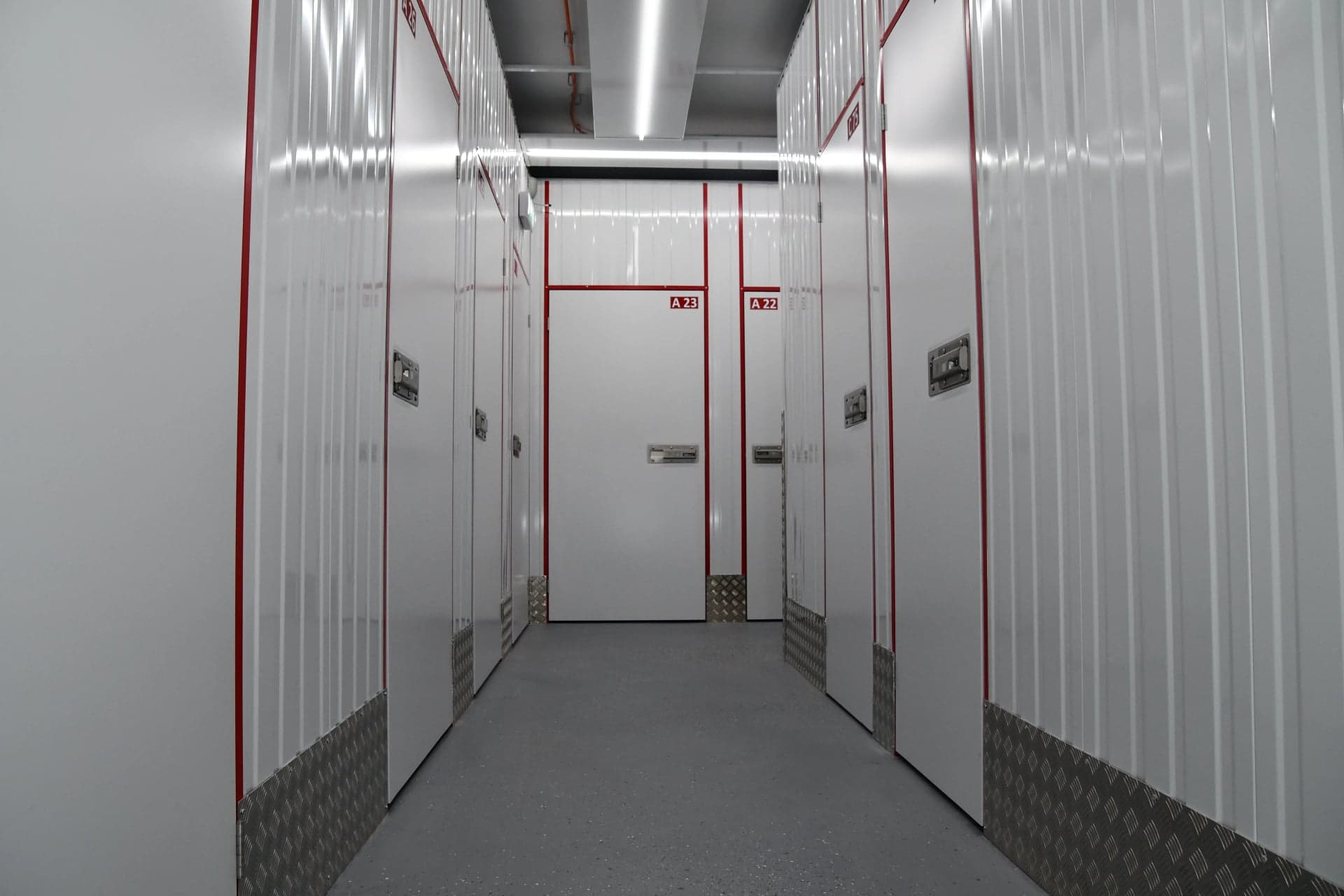
At BOXLY your fragile items are stored climate-controlled and protected: secured around the clock with video surveillance and alarm, clean and dry. You rent flexibly from just one week and find us at three conveniently located sites in Basel, Zurich/Dübendorf and Lucerne/Kriens. This way you bridge every moving phase without compromising on safety.
Quick checklist before packing
- Create inventory list of all fragile items and declutter
- Have all packing material ready (paper, wrap, boxes, markers)
- Reinforce box bottom and edges with tape, pad the bottom
- Wrap each piece individually, fill cavities with paper
- Plates on edge, glasses individually, mirrors and pictures upright
- Heavy at the bottom, light on top — small boxes for heavy items
- Label immediately: red FRAGILE, black contents and destination room
- Lift from the knees, don't fill boxes to the brim
Frequently asked questions
Wrap each plate and glass individually in acid- and ink-free packing paper. Place plates on edge in a box with dividers, glasses individually and filled with paper. Always stuff cavities so nothing shifts.
Ideally in the original box. If missing, wrap the device generously in bubble wrap and transport it upright. Label and pack cables separately to save searching later when setting up.
With a red marker write FRAGILE and HANDLE WITH CARE on at least two sides, with a black marker add contents and destination room. A "this way up" arrow shows the correct orientation. Always label immediately after packing.
Yes. At BOXLY you store delicate items climate-controlled, clean and under 24/7 video surveillance — flexibly from one week at the Basel, Zurich/Dübendorf and Lucerne/Kriens locations.
That depends on your inventory list. As a rule of thumb: plan for slightly more padding material rather than too little — an extra layer of paper or wrap is cheaper than a broken heirloom.